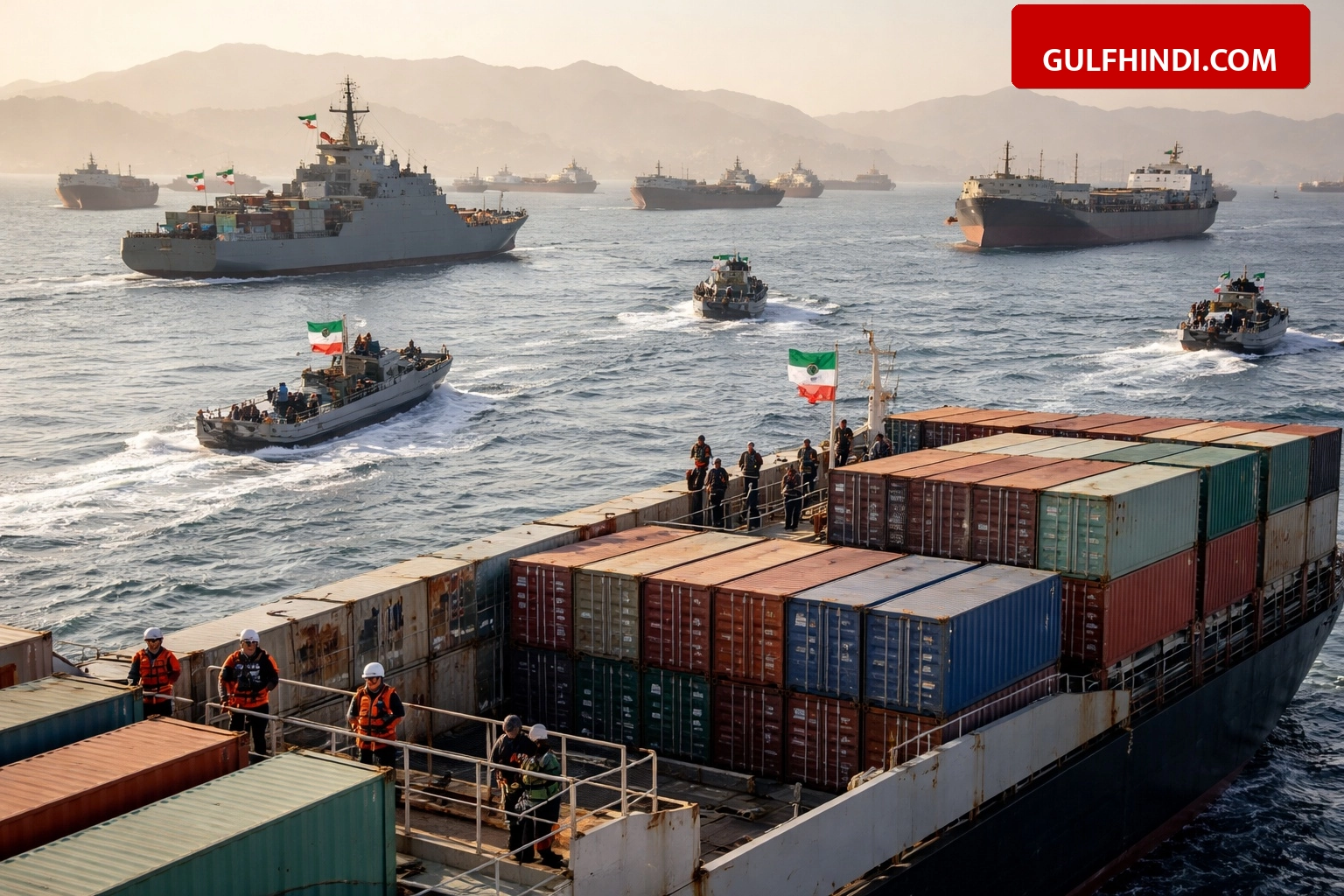
After the closure of the Strait of Hormuz, a major crisis of fertilizers and agricultural goods has arisen all over the world. Gulf countries supply 20 percent of the major fertilizers used worldwide. Due to the closure of this route, lakhs of tonnes of fertilizer is not able to reach the market every month. Looking at the current situation, till March 13, 2026, more than 23 ships are stranded in the Gulf area, which are loaded with more than 5 lakh tonnes of urea and other chemicals.
How much did fertilizer prices rise?
45 to 46 percent of the world’s urea trade takes place through this sea route. Qatar alone meets 10 percent of the world’s demand. Qatar Energy has halted work at its plant following the recent attacks and imposed force majeure. Due to supply stoppage, the prices of fertilizers are increasing rapidly.
In Southeast Asia, the price of urea has increased by 40 percent and has crossed $ 700 per ton. The price of Egyptian urea has seen an increase of 25 percent and has reached $625 per ton. Overall, since the beginning of the controversy, the prices of fertilizers have increased by 10 to 30 percent.
What is the new rule and the condition of the ships?
Iran has made it clear that now all ships passing through this strait will have to coordinate directly with the Iranian Navy. The International Maritime Organization (IMO) has also called a special meeting on March 13 to discuss the issue of safety at sea.
The situation is so sensitive that a ship leaving Jubail had to change its signal to ‘CHINA OWNER&CREW’ to keep itself safe so that it could pass without any hindrance. Currently, 5 lakh 30 thousand tonnes of urea and 3 lakh 58 thousand tonnes of sulfur are stuck in 23 ships stuck in the gulf.
What will be the impact on India and other countries?
Countries like India, China, Brazil, Pakistan and Bangladesh are heavily dependent on gas and nitrogen coming from Gulf countries. Due to stoppage of gas supply from Qatar, at least one ammonia plant in India has been closed and production in three other plants has been reduced.
Experts say that the sowing season is about to start in North America. In such a situation, if this road is not opened by March 20, then agriculture will be adversely affected and the prices of food items will increase rapidly all over the world. Every month more than 13 lakh tonnes of fertilizer passes through this route and now the hope of it reaching 30 to 40 lakh tonnes is lost.