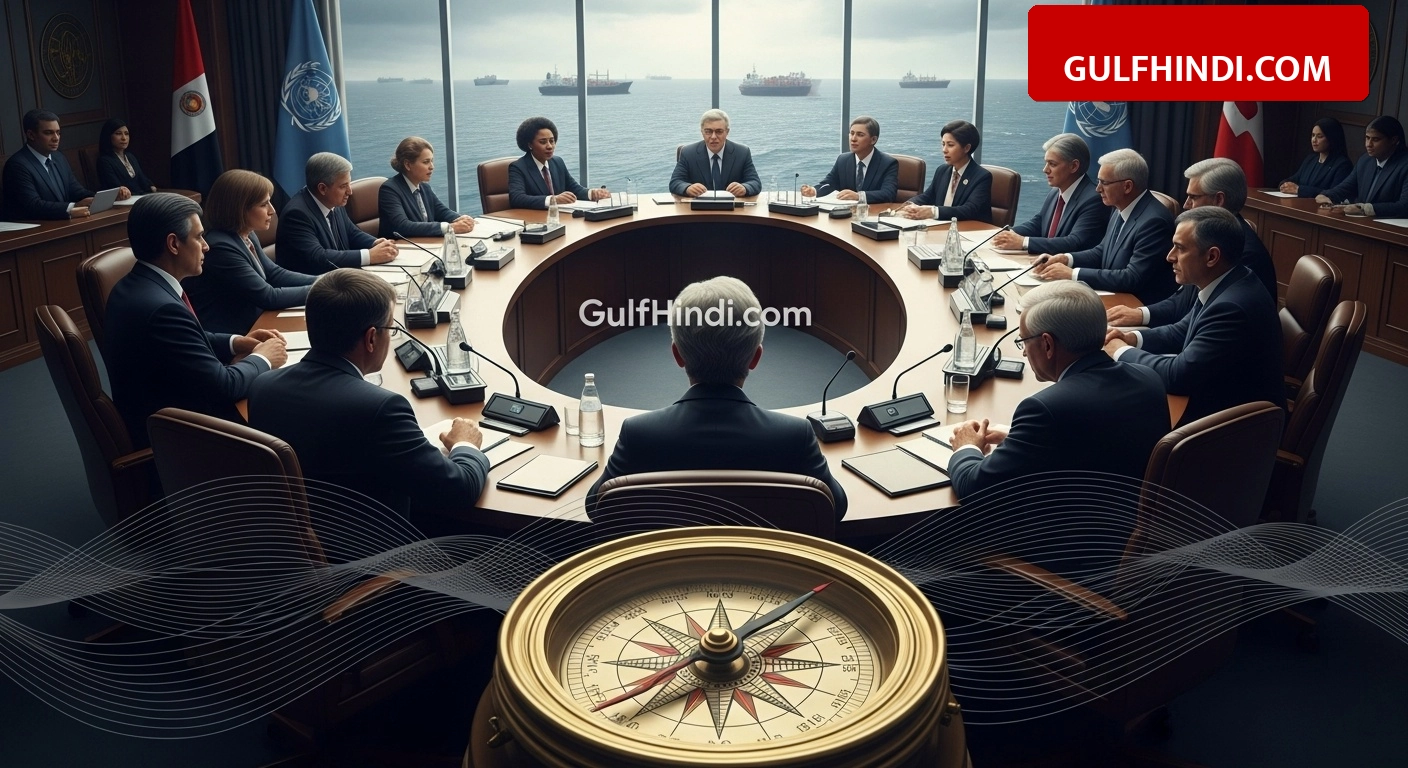
Amidst the ongoing tension in the Gulf countries, the International Maritime Organization (IMO) has called an emergency meeting. Due to the ongoing war between America, Israel and Iran, the movement of ships in the sea has been adversely affected. Currently about 20,000 seafarers are stranded or in danger in the waters of the Gulf. In view of this, the 36th special meeting of IMO is being held in London on 18 and 19 March 2026.
What is the current situation of ships and sailors in the Gulf?
Since the tension that started on February 28, the danger to people working at sea has increased significantly. So far 11 sailors have lost their lives or are missing. It has become difficult for ships to pass through the Strait of Hormuz. However, according to reports on March 18, Iran has allowed some ships to pass in the last 48 hours and movement has increased slightly.
The effect of tension is also visible in the nearby cities. On March 18, burning missile debris was seen falling in the sky over Dubai, further worrying maritime security in the area. Oman’s Navy is also continuously running rescue operations in the sea. War-risk insurance has been implemented for ships at major ports such as Jebel Ali (UAE), Dammam (Saudi Arabia) and Hamad (Qatar).
What will be discussed in the emergency meeting?
Mr. Victor Jimenez of Spain is presiding over this meeting. The main objective of this meeting is to ensure freedom of navigation for ships in the sea without any restriction. Along with this, the safety of common citizens and sailors will be kept on top priority. The meeting also includes representatives of the UN and large shipping companies from around the world.
IMO Secretary-General Arsenio Dominguez has clearly stated that seafarers should not be targeted and the current situation is absolutely unacceptable. Apart from this, organizations like BIMCO have warned that ships belonging to America or Israel are more at risk and sometimes neutral ships are also being targeted by mistake.
What effect will this have on inflation and supply chain?
Due to this tension, major shipping companies around the world such as Maersk, MSC, CMA CGM and Hapag-Lloyd have changed the route of their ships. Now ships are going via the Cape of Good Hope, which is taking more time and money. Its direct impact is on the common man’s pocket and the global market.
Freight rates on the Gulf route have increased by 55% this month. The price of Brent crude oil reached $ 126 per barrel on March 8, which is the highest in the last four years. Iran’s military has warned that if military activity by Western countries continues, there could be a huge surge in the market.