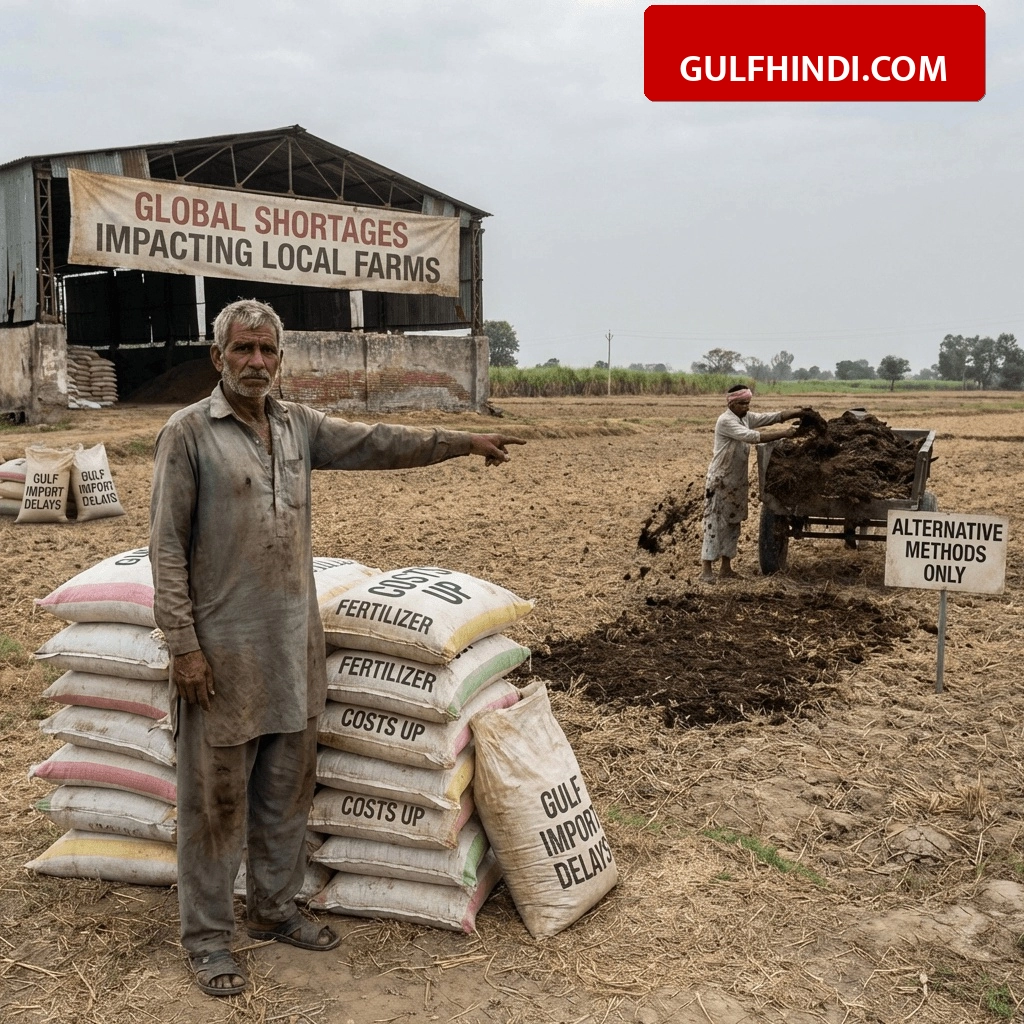
The impact of the ongoing tension in the Gulf countries and the closure of the Strait of Hormuz is now visible on the farmers of South Asia. As the sowing season approaches, the shortage and rising prices of fertilizers have increased the concern of countries like India, Pakistan and Nepal. The United Nations and local governments are looking for ways to deal with this crisis so that the lack of fertilizer does not have a negative impact on crop production in the future. Due to the closure of the Strait of Hormuz, the supply of fertilizers has been affected due to which the prices have increased by 30 to 40 percent.
What are the main reasons behind the fertilizer crisis?
Supply chain disruption: The Strait of Hormuz, through which one-third of the world’s fertilizer trade passes, is closed from early March 2026.
Reduction in Production: Big companies like Qatar Energy (QAFCO) have closed their urea plants due to shortage of gas.
Effect of inflation: There has been a huge increase in the international prices of fertilizers due to which the cost of freight and insurance has also increased.
Ban on export: Keeping in mind its domestic security, China has banned the export of urea.
What is the current situation in India and other countries?
Country/Institution Current situation and steps taken
India
The government has given priority in gas supply to fertilizer factories and work is being done on new import options.
Nepal
At present there is a stock of 1.37 lakh tonnes of fertilizer but the old agreement with India has ended on March 31.
united nations
The UN is working on a plan to build a secure corridor through Oman’s Salalah Port.
Indian Prime Minister Narendra Modi has informed the Parliament that adequate fertilizers have been arranged for summer sowing. The government has placed fertilizer manufacturing companies in ‘Priority Sector-2’ so that they can get at least 70 percent gas supply. Experts say that if this crisis continues for a long time, it may reduce the production and the prices of food items may increase in the future. Nepal’s Agriculture Ministry has also warned that the increase in global prices may delay the supply of fertilizer.