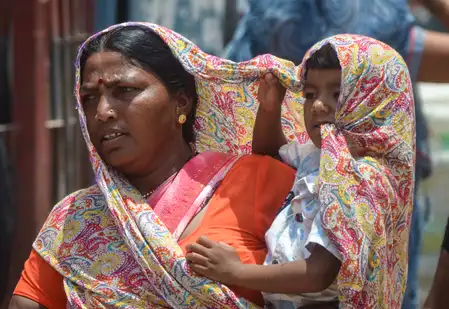
Lucknow, June 28 (IANS). Amidst the challenges of scorching heat and changing weather, the Uttar Pradesh government has prepared a special ‘Heat Action Plan’ to protect students from heat-related diseases. Under this, guidelines have been issued for teachers to help them keep students safe from excessive heat, exhaustion and heatstroke.
The Basic Education Department has issued ‘Guidelines 2026 for teachers to make students aware about heat-related diseases’.
These guidelines are aimed at providing necessary information and practical training to teachers, including heatwave prevention, recognition of symptoms of heat stroke and heat exhaustion, first aid and measures to protect students.
Schools have been advised to implement ‘Heat Action Plan’ to sensitize children, parents and school community. Under this, posters related to ‘do’s and what not’ will be put up, so that the heat does not have a negative impact on children’s education, health and school life.
The guidelines state that teachers will play an important role in ensuring the safety of students during the heatwave. Teachers will educate students on heat prevention measures during morning prayer meetings, classroom teaching, co-curricular activities and daily school activities.
Every school will have to prepare its own ‘School Heat Action Plan’ and appoint a ‘Health Nodal Teacher’ to coordinate heatwave related activities.
Special awareness sessions will be organized for teachers, staff and students. Heatwave prevention measures and emergency contact numbers will be prominently displayed in the school premises.
The government has directed that every school should be equipped with first aid kits, ORS, digital thermometers and connectivity to emergency medical services, especially 108 ambulance service.
All strenuous physical and outdoor activities will be stopped during an ‘Orange’ or ‘Red’ heatwave alert.
Schools have been asked to ensure that students have continuous access to clean and safe drinking water. Children will be encouraged to drink water every 20 to 30 minutes and will also be asked to bring their own water bottles.
The guidelines recommend wearing light-coloured cotton clothes, using a cap or umbrella and consuming water-rich seasonal fruits like watermelon, cantaloupe and cucumber.
If any student shows symptoms like excessive sweating, excessive thirst, headache, dizziness, weakness, muscle cramps, vomiting, confusion or unconsciousness, then he should immediately be taken to a shady place and given first aid and cold bandages should be applied. If necessary, 108 ambulance or nearest health center should be contacted.
Apart from this, instructions have been given to keep special monitoring on students suffering from asthma, heart disease, diabetes, obesity or disability and those who have recently recovered from fever or diarrhea.
–IANS
AMT/DKP