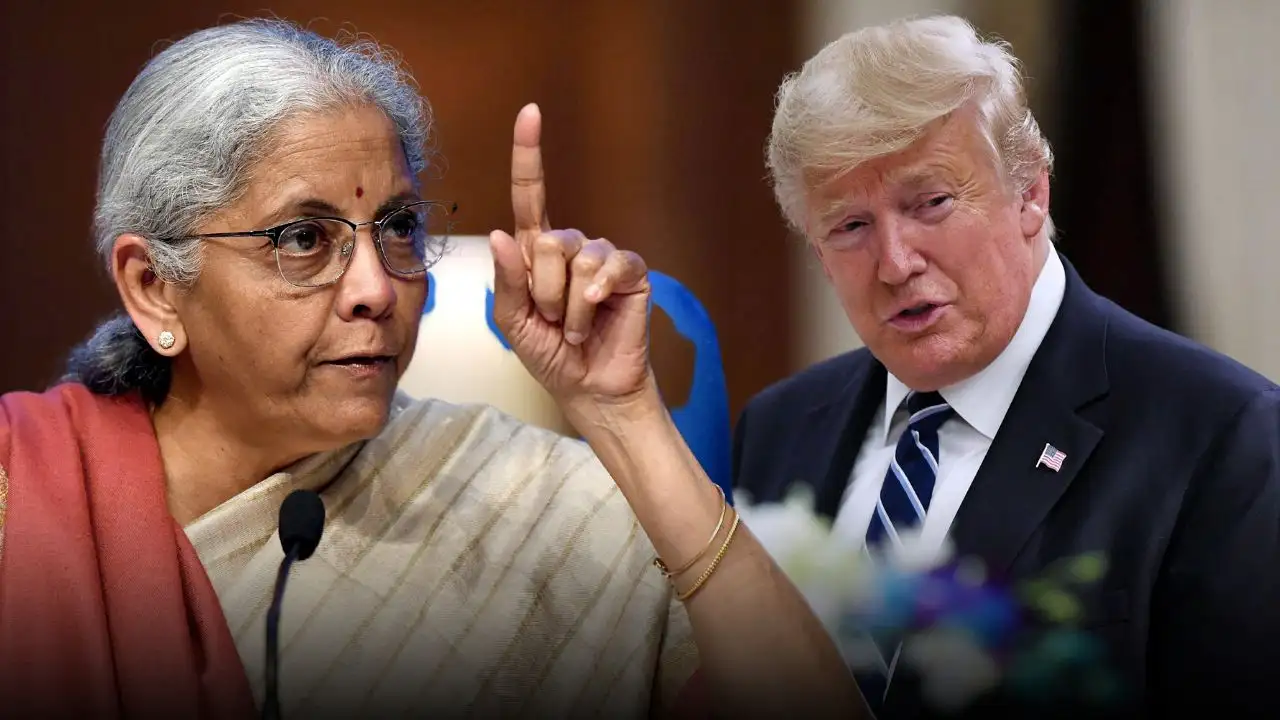
The turmoil seen in the global economy following the tariffs imposed by US President Donald Trump in April has exposed the weaknesses of the international trading system. A sharp decline in stock markets, escalating trade wars between countries, and strained diplomatic relations have been direct results of this policy. Its negative effects have also been felt inside America, where rising inflation has affected the common citizens, this has also been acknowledged by many American lawmakers.
Nirmala Sitharaman: Tariff is a weapon
In this backdrop, Union Finance Minister Nirmala Sitharaman, while speaking at the ‘Times Network India Economic Conclave 2025’, clearly said that global trade is currently being used as a weapon through tariffs and other measures, which is a matter of concern. He said it is now very clear that global trade is neither completely free nor fair, and hence India must proceed very carefully and strategically.
Sitharaman stressed that merely discussing tariffs is not enough; The overall economic strength of the country will give India additional advantage on the global stage. He also said that India is often accused of being protectionist or being a “tariff king”, but the truth is that India has never used tariffs as a weapon. India has imposed tariffs only to protect its domestic industries, so that no foreign country or company harms the local industries by flooding the market with cheap or excess goods.
India against tariff policy
The Finance Minister also raised the question as to why some countries today are openly announcing higher tariffs without facing any significant opposition, whereas in the past such actions were criticized. He described it as the “new normal” of global trade. His statements are considered important as the tariff policies of many countries including the US are affecting global trade, and recently, countries like Mexico have also announced higher tariffs on countries with which they do not have free trade agreements. Under such circumstances, India’s cautious and balanced trade policy is considered vital for its economic stability and long-term interests.