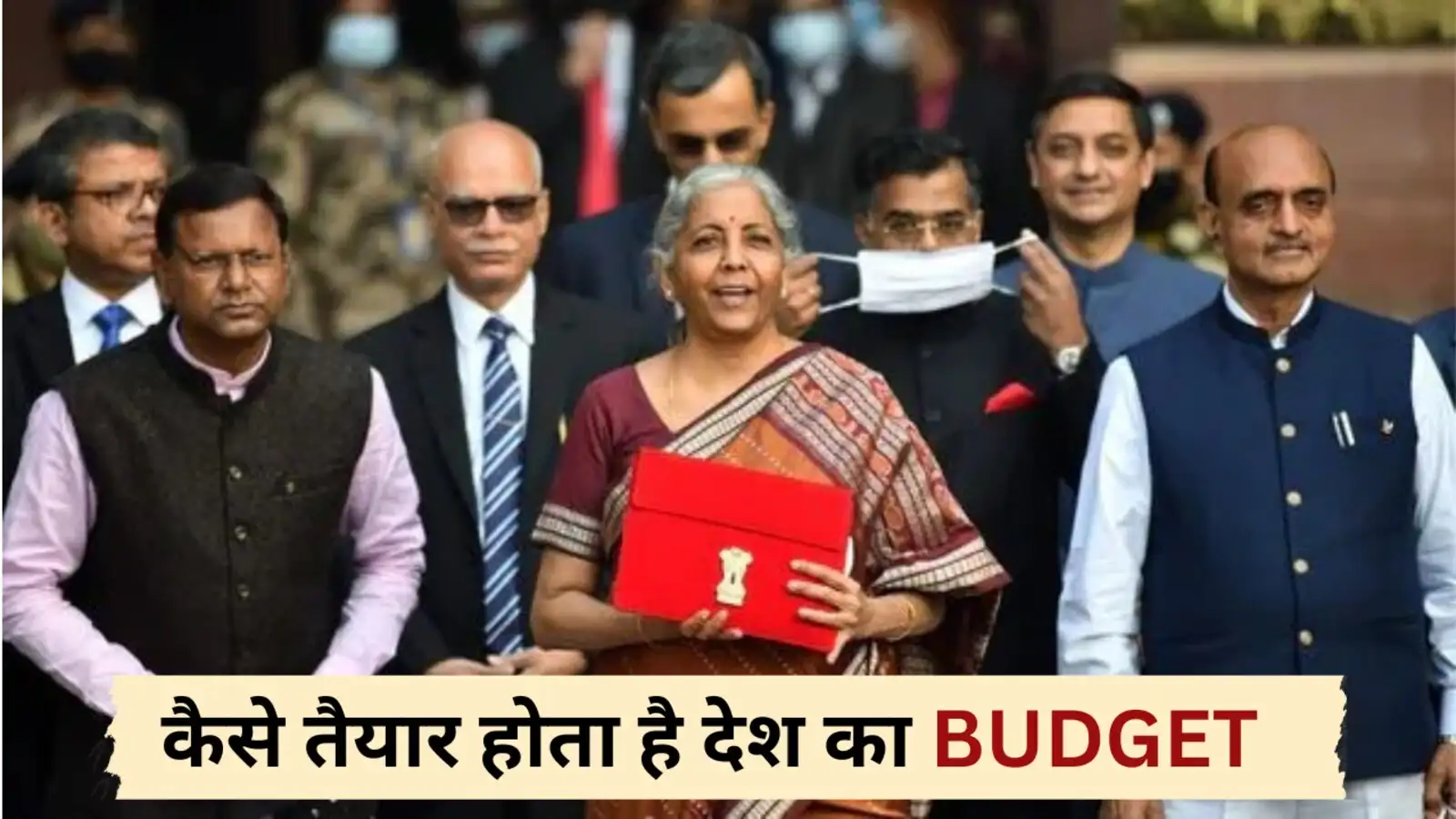
Discussions regarding the Union Budget for 2026-27 have intensified. As per parliamentary tradition, the Union Budget has been presented on 1 February every year since 2017. In 2026, 1 February falls on Sunday. It is expected that Finance Minister Nirmala Sitharaman can present the budget on that day also. Meanwhile, a question arises: Who actually prepares the country’s budget and what is its process? Let us know.
Which department prepares the budget of India?
The entire responsibility of preparing the draft of the Union Budget rests with the Department of Economic Affairs. This department works under the Finance Ministry. Although this department plays a key role, the process is very collaborative. Institutions like NITI Aayog and various administrative ministries provide data, estimates and policy inputs.
Budget preparation begins months in advance
The formal process of budget making starts around September–October. The Finance Ministry issues a circular to all central ministries, departments and even state governments, asking them to submit their expenditure estimates and financial needs for the coming financial year. These estimates form the foundation of the budget framework.
Scrutiny and pre-budget consultation
Once the proposals are received, senior officials of the Finance Ministry review them carefully. After this, a consultation takes place under the chairmanship of the Finance Minister. Representatives of banking, industry, agriculture, trade unions and economists are called in this meeting.
Final allocation and Prime Minister’s approval
After consultations, the Finance Ministry finalizes revenue estimates, expenditure limits and allocations for each department. These decisions are taken on the basis of financial discipline, economic priorities and development goals. The final draft is discussed with the Prime Minister.
Halwa Ceremony and Budget Secrecy
Before the printing of the budget documents, a traditional Halwa ceremony takes place in the North Block. It marks the beginning of the final and most confidential phase of budget preparation. Subsequently, the officials involved in preparing and printing the budget are isolated from the outside world. After this, the Finance Minister presents the Union Budget in the Lok Sabha under Article 112 of the Constitution. The government cannot withdraw money from the Consolidated Fund of India without the approval of Parliament. Therefore, this presentation is very important constitutionally. As soon as Parliament approves the budget, government spending for the new fiscal year can legally begin.