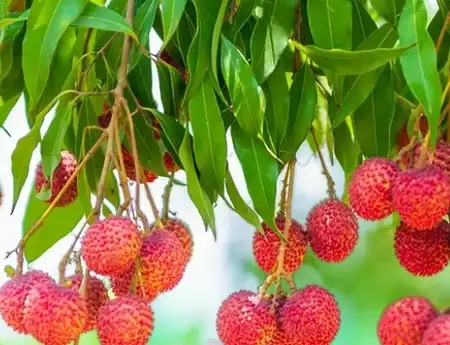
New Delhi, June 21 (IANS). As soon as the summer season arrives, an abundance of fruits like mango, watermelon, melon and litchi start appearing in the markets. Among these, litchi is liked by everyone from children to adults due to its sweetness, juice and taste. Nutritionists also consider it to be a fruit rich in vitamins and antioxidants. But on one hand it benefits the body and on the other hand it can also harm health.
Vitamin C is found in abundance in litchi, which helps in strengthening the body’s immunity. Apart from this, it contains fiber, potassium, copper and many types of natural antioxidants, due to which litchi is considered beneficial for skin, heart and general health.
According to scientists, Vitamin C present in litchi helps in producing collagen in the body. Collagen is a protein that plays an important role in keeping skin, bones and blood vessels strong. The fiber present in it helps in improving the digestive system. Fiber relieves intestinal problems and provides relief from problems like constipation. Potassium is considered beneficial for the heart and blood pressure, as it helps maintain the balance of fluids in the body.
But, scientific research has also found that some natural chemicals are present in raw or undercooked litchi, which include elements like hypoglycin-A and methylene cyclopropyl glycine. These generally do not become a big problem for people, but in certain situations their effect can be serious, like, being hungry for a long time or eating too much litchi in the morning on an empty stomach.
Scientists say that the body needs glucose for energy. When a person does not eat, the body uses previously stored energy. But if the energy reserves in the body are already low, then the problem may increase. Some chemicals present in litchi can affect the process by which the body creates new glucose when needed. As a result, blood sugar levels can drop rapidly. This condition is called hypoglycemia.
When blood sugar drops too much, its biggest impact is on the brain. The brain depends mainly on glucose for energy. If adequate glucose is not available, the person may suffer from problems like weakness, dizziness, fainting or seizures.
Experts say that litchi problems arise when it is eaten on an empty stomach, in excessive quantities or in circumstances like malnutrition. If a normal and healthy person consumes litchi in balanced quantity after a meal, he gets the benefit of vitamins, elements and antioxidants present in this fruit.
–IANS
PK/DKP