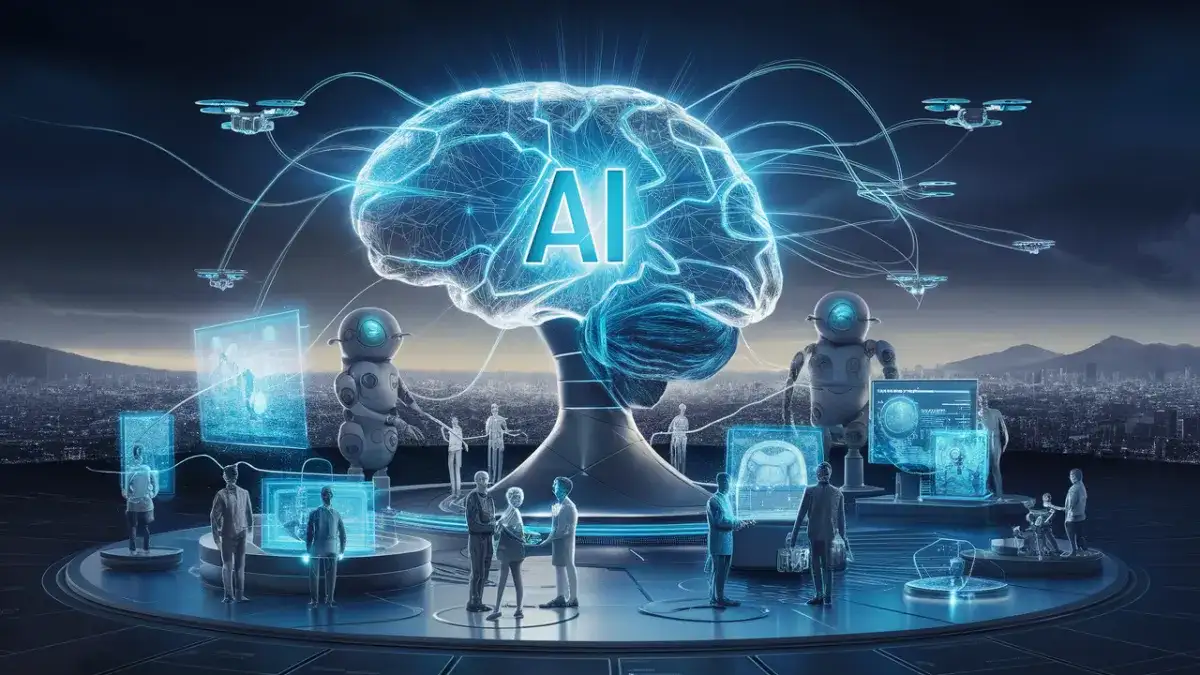
Technology and science have reached a point where machines working inside the human body are no longer a fantasy but are becoming a reality. One of these fascinating and mysterious technologies is nanobots. These micro robots are so small that they can enter human nerves, blood and brain cells. In recent years, scientists have claimed that such nanobots may also have the ability to erase or alter human memory in the future.
What are nanobots?
Nanobots are basically microscopic robots, whose size is as small as one nanometer (one billionth of a meter). These have been developed using nanotechnology and their function is to enter the body and treat or diagnose at the level of cells, nerves and organs. These small machines are designed to deliver medicines into the human body in the form of injections. After entering the body, they work according to their program, such as destroying cancer cells, removing blood clots, or monitoring brain signals.
Can nanobots erase memory?
Scientists believe that brain memory is maintained through neuron and synapse connections. If these connections are altered through technology, memory may be affected. This is where nanobots come into play. In the future, these could be programmed to access specific parts of the brain and block or erase nerve signals. This technology can erase or temporarily block specific memories of a person. Although it sounds like a story from a science fiction movie, there are several scientific experiments underway that prove that it is possible to modify brain information using nanobots.
Both benefits and risks exist
The use of nanobots could prove to be a revolutionary step for medical science. This can help in treating diseases like brain tumor, Alzheimer’s, Parkinson’s and neurological disorders. However, on the other hand, this technology can also pose a serious threat to privacy and mental security. If this technology is used with malicious intent, one can control someone’s memory, thoughts or emotions, which is extremely dangerous to human freedom.
What is possible in the future?
So far, nanobots have only been experimentally tested in the human brain. Scientists aim to use them in medical surgery, drug delivery and neurotherapy in the coming years. However, abilities such as memory erasure remain theoretical at this time. Experts say that it is important to move this technology forward in a safe and ethical direction, otherwise its misuse can become a major threat to human civilization.