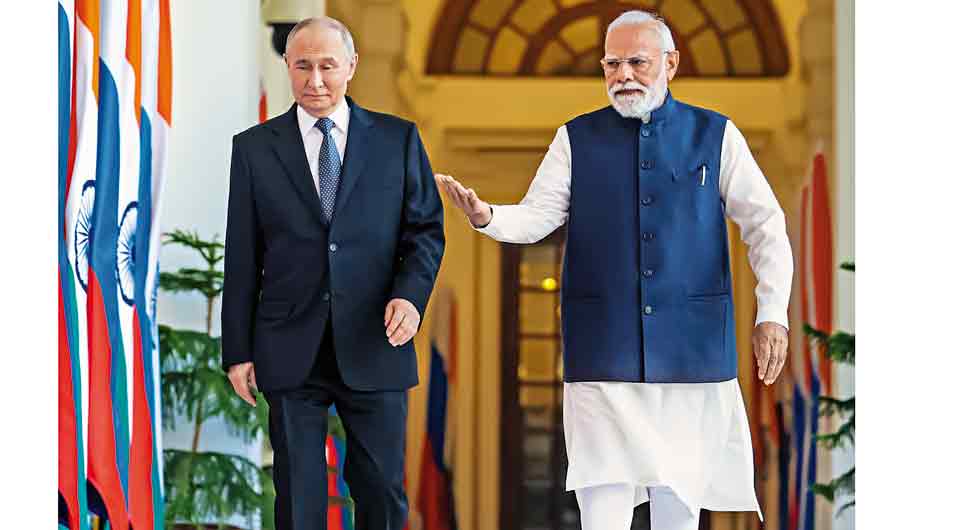
The Russian President’s visit may not have yielded any major results, but it once again proved the strength of the relationship.
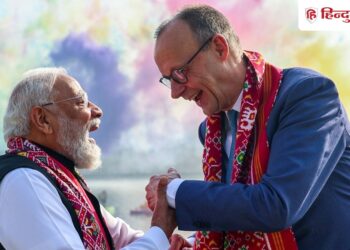
Russian President Vladimir Putin’s recent visit to India was keenly watched in capitals across the world, coming at a time of geopolitical turmoil and in the backdrop of a deterioration in India-US relations over tariffs. But more important was his message. Putin’s warm welcome in New Delhi was indicative of a partnership that refuses to bow to pressure. For Moscow, it is a powerful affirmation of acceptance in the world’s largest democracy, especially as the US and Europe have sought to isolate Russia since the 2022 invasion of Ukraine.
India’s message was to remind the world and its own people that strategic autonomy, or as External Affairs Minister S. “Freedom of likes and dislikes,” says Jaishankar, is not just a slogan. US President Donald Trump has imposed 50 percent tariff on India’s exports. Half of that is due to buying oil from Russia, which the US claims is fueling Moscow’s Ukraine war. The irony is that America wants India to stop buying cheap oil, while America itself continues to import nuclear fuel from Russia. Europe also does the same. Again, China buys more oil from Russia than India, but America does not target China. India has significantly reduced its oil imports from Russia and may even stop it altogether due to fear of further penal tariffs. Also, India has increased oil imports from America. This means that the purpose of Trump’s tariffs is to target India so that New Delhi can perhaps be forced to make a trade deal on America’s terms. Negotiations on a bilateral trade deal between India and America are ongoing and it is unlikely to be finalized this year.
Cross eye: US President Trump and China’s Xi Jinping
But the message of the Putin-Modi summit is that New Delhi has taken a conscious decision to maintain its old ties with Russia, even as the emphasis is on deepening relations with the US and other Western countries. The special thing is that now there is talk of President Volodymyr Zelensky’s visit to India, although nothing is formal yet. It is also common knowledge that next year the chief guests of Republic Day will be European Commission President Ursula von der Leyen and European Council President Antonio Costa. The January visit will coincide with the India-EU summit, in which the long-pending trade agreement will be finalized.
In the opinion of some people, Putin’s visit is just a show and less effective. In his opinion, this is just a show of the traditional friendship between India and Russia, which continued even during the Cold War era.
“Interestingly, there have been very few comments on this summit,” says Ian Hall, a professor at the School of Government and International Relations at Griffith University in Australia. I think Narendra Modi’s Moscow visit was a turning point for a lot of people in the US and Europe, which showed where India stands. Nothing new came out of this summit in terms of pictures or important agreements.
Jaishankar said after the summit that India-Russia relations “are among the most stable in the world”, especially when compared to Moscow’s changing relations with China, Europe and the US. The same can be said about India’s relations, but this stability with Russia stands out the most. The joint statement described the relationship as “a time-tested progressive partnership based on trust and mutual respect” and called it “the foundation of global peace and stability.”
Putin’s visit will help both India and Russia reinvigorate their partnership amid global tensions. The result was that both countries successfully signaled, “India has asserted its strategic autonomy without jeopardizing its relations with the US or Europe.” Neither India nor Russia wants to anger America. India has reiterated its stand on Ukraine and advocated peace. This is what C. Raja Mohan, analyst and visiting research professor at the Institute of South Asian Studies, National University of Singapore, said. “The emphasis was on the economy,” says Raja Mohan. India wants to diversify its trade and Russia also wants to take advantage of the opportunities in the world’s fifth largest economy and look beyond China for trade.
Defense and security cooperation have been the cornerstone of India-Russia relations, but the main focus at this year’s summit was on the economy. Despite warm political relations and excellent government support, economic ties, especially private investment, remain the weakest link. Both Prime Minister Narendra Modi and President Putin are hoping to accelerate economic growth and achieve the target of $100 billion trade by 2030. Modi was confident that this figure would be achieved much before the deadline. The interest in increasing economic cooperation is clearly visible from the large business delegation accompanying President Putin.
European Commission President Ursula von der Leyen
The most important document during this visit was the Mobility Agreement, which will allow Indians to work in Russia. Its purpose is to make the process legal and easy. Especially the demand for construction sector workers is high. In the case of fertilizers, joint venture is another important agreement. India is the second largest fertilizer importer in the world after Brazil. Most of it comes from Russia and the joint venture will be very helpful in assuring continuous supply to Indian farmers.
After the meeting, Foreign Secretary Vikram Misri told reporters, “I would say that economic cooperation is the main goal and the most important focus of this special visit. There is a need to remove non-tariff barriers and legal barriers to increase bilateral trade and strengthen economic cooperation.
New Delhi wants to increase its exports to Russia in sectors like pharmaceuticals, agricultural produce, marine products and textiles to correct the existing trade imbalance. At present, Indian exports to Russia are only 5 billion dollars, while India imports about 68 billion dollars.
Both sides discussed in detail the steps needed to usher in an era of greater bilateral economic engagement. The intention was clear, but how much time will it take for economic transactions to accelerate is an open question. India and Russia want to protect their trade from Western sanctions by using their national currencies for trade. However, this process will take time and effort to begin.
Although India’s relations with Russia are high on trust and most people in India consider Russia to be a close friend, Moscow’s increasing dependence on China since the Ukraine war is a matter of concern for Indian policy makers.
Despite the thaw in frosty relations following the India-China military clash in Ladakh in the summer of 2020, tensions remain and China remains a major threat to India. Under these circumstances, it is difficult to build a three-way relationship between Russia, India and China, as Moscow wants.
Nevertheless, Moscow also wants to get rid of its overdependence on China and Beijing’s growing economic and geopolitical clout in Eurasia. Putin does not want to put everything in China’s basket. Therefore, emphasis on increasing economic cooperation with India remains a part of Putin’s strategy. It may be effective for Moscow to balance its relations with traditional friends India and Beijing.
Many people in India too are worried about Russia’s growing closeness to Pakistan, from which Russia had earlier carefully maintained a distance. Former Indian diplomat Anil Wadhwa says, “Russia’s friendship with China is strategic. Its relations with Pakistan are transactional and an attempt to keep China in check in the region. He is confident that the future of India-Russia relations will remain stable with both sides exploring new avenues of cooperation.
So far, India has been successful in balancing relations between Russia on the one hand and America and Europe on the other. Can India continue to do this? Jaishankar thinks so and describes India’s foreign policy as “multilateral”, focused on enhancing national options and interests by engaging with as many countries and global groups as possible. India has been doing this and the Modi-Putin summit was part of this engagement. The meeting may not have yielded any major results, but it has reaffirmed the strength of a relationship that has weathered many storms, including the breakup of the former Soviet Union. Still, it may face a new test in the coming days. It also remains to be seen how India is able to maintain balance in its relations.