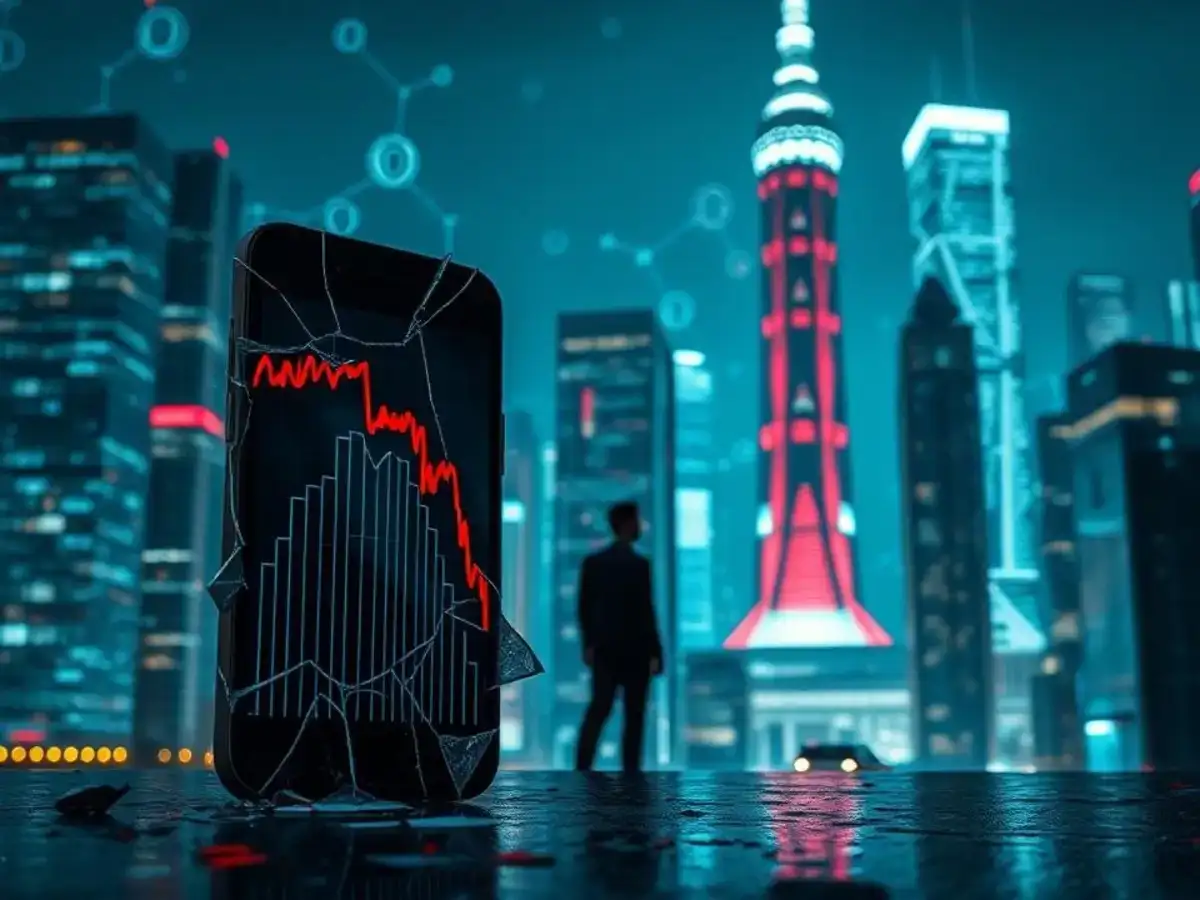
The artificial intelligence (AI) boom has become a giant financial bubble, and it is likely to burst soon. Analysts believe this bubble to be 17 times larger than the dot-com bubble and four times larger than the 2008 real estate crisis. Companies have exaggerated the capabilities of AI, leading to huge investments. This situation could lead to a serious economic crisis, which could be difficult to recover from. India will also not remain untouched by this, and it will also have to face many challenges.
Independent research firm MacroStrategy Partnership has expressed this concern in its report. According to the firm, the AI bubble has become too big. Julien Garen and his team believe that companies have greatly exaggerated the true power of AI. The adoption rate of Large Language Model (LLM) in large businesses has started to decline. Julian previously led the commodity strategy team at UBS. Garen also said that ChatGPT has reached its limits. He said that its new version is ten times more expensive than its predecessor, but does not show any significant improvement in performance. This situation shows that the development of AI is not catching up as expected.
The economic consequences could be serious
Garen warns in his report that this AI boom could have serious economic consequences. “The danger is not only that this will push us toward Zone 4 deflationary collapse in our investment timeline, but also make it difficult for the Fed and the Trump administration to pull the economy out of it,” the report said. This means that if this bubble bursts, the economy could go into recession, making it very difficult for the government to handle.
Dario Perkins, managing director of global macro at TS Lombard, expressed similar concerns. In an interview, he said that tech companies are taking on huge loans to build AI data centers. He compared this trend to the dot-com and subprime mortgage bubbles. Perkins explained that big tech companies are not concerned about whether their investments will yield any profits because they are in a race. “This is definitely a red flag in itself,” he said. This means that companies are focusing more on competition than profits, which is an alarming sign.
Fear of stock market decline
Goldman Sachs CEO David Solomon also expressed concern. He told the Italian Tech Week conference that he expected a stock market decline in the next few years because of the huge amount of investment being made in AI projects. He said, “I think a lot of money will be invested that will not yield any return, and when that happens, people will not like it.” Solomon did not directly call AI a bubble. However, he did say that some investors have become too risk averse due to their excitement, which is a sign of a financial bubble.
Amazon CEO Jeff Bezos also admitted at the conference that there is a bubble in the AI industry. However, he also said that AI will bring significant benefits to humanity. Bezos said, “Amidst all this enthusiasm, investors are having difficulty distinguishing between good and bad ideas. This is probably the case today.” This means that it is becoming increasingly difficult to choose between right and wrong when investing in AI. Experts believe the AI bubble is about to burst. Perkins did not predict when it would erupt, but said it was approaching its peak. He said, “I won’t talk about it right now. We are closer to 2000 than 1995.” This means that this bubble can burst at any time, and the situation could be similar to the bursting of the dot-com bubble of 2000.
What should India do?
India is not untouched by global climate change. Therefore, to mitigate the impact of any possible global recession or AI bubble, India must act prudently. First, it should maintain domestic demand by continuing government spending on infrastructure and rural incomes. This will reduce the impact of global shocks. Second, to deal with potential job losses due to AI, large-scale skill development programmes, especially in the IT and manufacturing sectors, should be implemented. Third, the country should maintain regulatory strictures on high-valuation and highly indebted startups to prevent the AI boom from turning into an economic bubble.