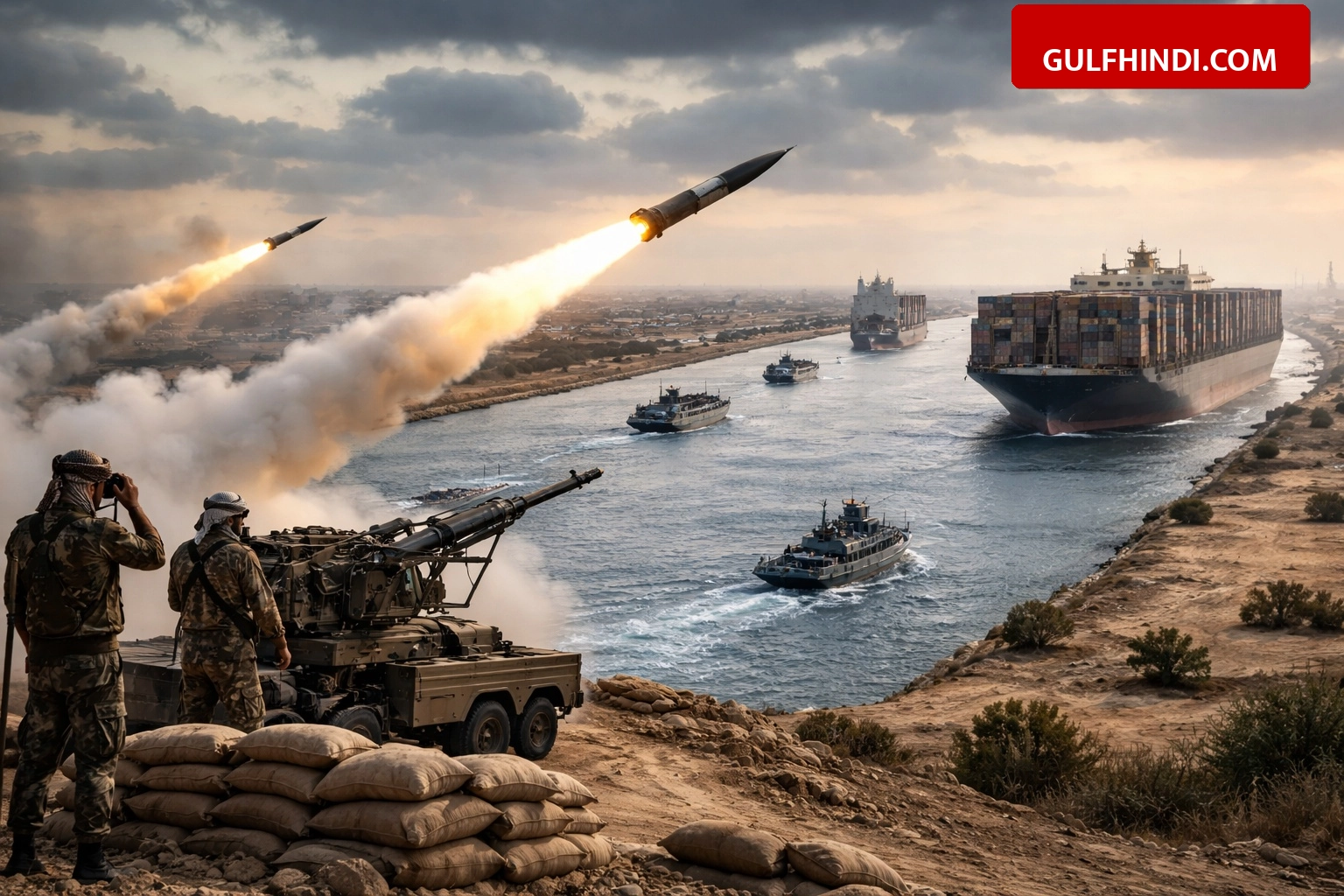
Yemen’s Houthi rebels have launched a major missile attack on Israel, increasing the threat to the Red Sea and the Suez Canal. This attack was carried out from a distance of about 2,000 kilometers. Due to this tension, there is a possibility of adverse impact on trade and supply chains around the world. According to experts, due to the closure of Bab-al-Mandeb and Suez Canal, essential goods may become expensive in many countries and global trade may stop.
Houthi attacks and the situation of merchant ships in the Red Sea
Yemen’s Houthi rebels have fired missiles and drones targeting Israeli military bases. Houthi spokesman Brigadier General Yahya Sari said that this operation will continue until Israel stops its attacks. Due to increasing tension in this area, big shipping companies like Maersk have changed the route of their ships. About 12 to 15 percent of the world’s trade passes through the Suez Canal and the threat to this route could disrupt the global supply chain.
What are the new rules on the Strait of Hormuz and Iran?
Iran’s military has now made it mandatory for ships passing through the Strait of Hormuz to obtain permission. Under this new system, which came into effect from 28 February 2026, till now more than 350 ships are waiting for Iran’s permit. Iran has made it clear that this route will remain closed for America, Israel and their allies. Houthi rebels currently have more than 200 missiles and 250 drones, which they are using to maintain control over this sea route.
Main details Latest information Distance of attack around 2,000 kilometers Ships stuck in Hormuz More than 350 commercial ships Importance of Suez Canal 30% of global container traffic Date of new rules implemented from 28 February 2026 Houthi control captures 60% of Yemen.